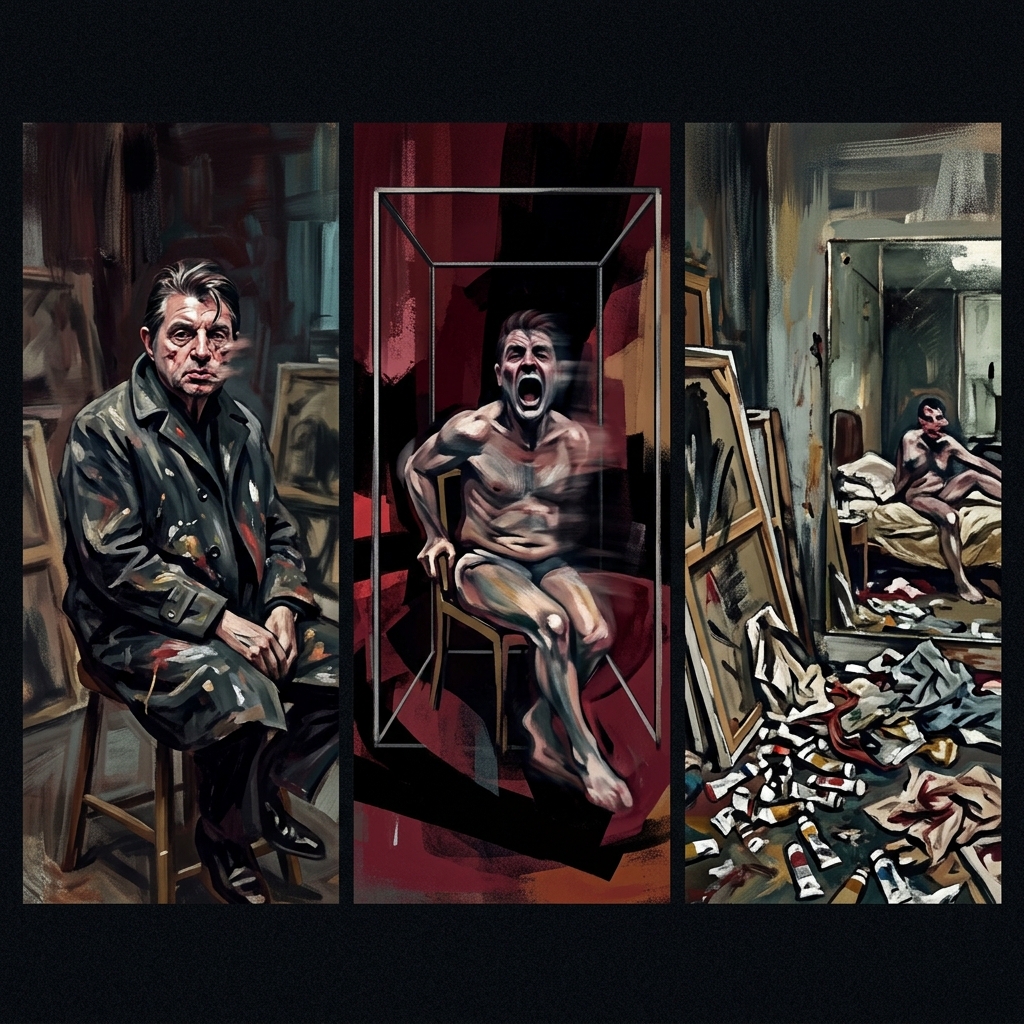
Francis Bacon Artist: The Artist Behind Some of the Most Disturbing Paintings
Stand in front of a Francis Bacon painting, and your body will react to it long before your brain grasps what it sees: A gaping mouth emerges from an opening tear, a twisted figure writhes on the floor as if stretched on a rack, a mixture of viscous brushwork and minute detail. Most visitors to Bacon’s exhibitions are stunned, then fascinated.
If he looked up “Francis Bacon artist” on Google, you probably want to know who he was, why his work holds such a reputation, and whether it deserves it. This article will provide information about his biography, the themes of his works, and what to look for when analyzing his art. Additionally, it will discuss a few tips for dealing with work that is not easy on the eye but stays with you long after you leave it.
One thing to note is that “F. Bacon” may also refer to Francis Bacon, the Elizabethan philosopher and statesman (1561-1626). The painter is most likely not related to him, but he was sometimes considered to be a distant descendant of the philosopher’s family. Check the sources before repeating this claim, as it appears to be controversial.
Who Was The Francis Bacon Artist?
Francis Bacon was born in Dublin on 28 October 1909 to English parents and died in Madrid on 28 April 1992. He is widely regarded as one of the most important British painters of the twentieth century, despite being born in Ireland and never attending an art school.
Several significant details of his early life may be considered important in relation to his art:
- He had a severe asthma attack in his childhood, which prevented him from serving in the army.
- Bacon’s father was a horse-racing trainer; the artist’s relationship with him was strained, and he left home at a fairly young age.
- Bacon wandered around London, Berlin, and Paris in the late 1920s, soaking up the atmosphere of films, painting, and life in general.
- He began his career as a designer rather than a painter: in the early 1930s, he worked in London creating furniture and interior designs.
The first major influence on Bacon was a visit to an exhibition of Picasso’s paintings in Paris in the early 1920s – but he was largely self-taught, and destroyed many of his early works. This reveals a personality trait of a perfectionist who was extremely critical of his own art and felt that his early efforts were a waste.
What Was Francis Bacon Known For?
The short version of what Francis Bacon was all about takes the form of four points.
- Distorted human figures: The bodies in his paintings are smeared, stretched, and collapsed, but clearly human.
- Emotion: Fear, desire, grief, and isolation take form in the body.
- Triptychs: He often painted three images connected together, using the form of religious altarpieces but without any religious message inside.
- Screaming heads and the papal series: His repainting of Pope Innocent X by Diego Velázquez became one of his most famous works.
He was not an abstract painter and hated the idea that his pictures told a story. He wanted the images to strike the viewer’s nervous system, and so they can seem violent in their effect.
Francis Bacon Artwork: Key Paintings to Know
You do not need to know every painting, but a handful will tell you most of what you need.
| Work | Approx. date | Why it matters |
| Three Studies for Figures at the Base of a Crucifixion | c. 1944 | The breakthrough that shaped his reputation |
| Head VI | 1949 | An early screaming pope, tied to Velázquez |
| Study after Velázquez’s Portrait of Pope Innocent X | 1953 | One of his most reproduced images |
| Figure with Meat | 1954 | Combines the papal image with a carcass |
| Three Studies for a Crucifixion | 1962 | A darker, more violent triptych |
| Triptych May-June 1973 | 1973 | A response to the death of his lover George Dyer |
| Three Studies of Lucian Freud | 1969 | Portrait of his friend and rival; sold for a record price in 2013 |
Details such as dates and locations can differ slightly between sources, so check museum records before quoting them.
The Screaming Popes
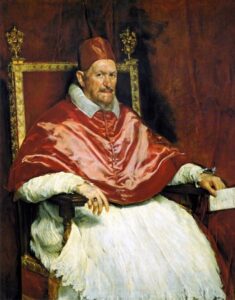
Bacon took Velázquez’s calm, powerful portrait and put it behind bars of vertical lines, with the face breaking open in a scream. He drew on an unusual mix of sources, including a still of a screaming nurse from Eisenstein’s film Battleship Potemkin and medical illustrations of the mouth. He was also reportedly reluctant to view the original Velázquez in person for years, which fits his habit of working from reproductions and photographs.
Triptychs and Grief
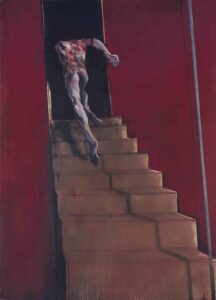
After his companion George Dyer died in 1971, the work took a different turn: Dyer had died in Paris just before Bacon’s big solo show there, and the triptychs that followed confront absence and loss with an almost clinical detachment. You don’t need to know the story to feel the power of these paintings, but it helps.
Francis Bacon Art: Style and Technique
Bacon’s use of image-making in his art is more controlled than it might seem. Some recurring motifs are:
- flat, bright backgrounds that isolate the subject, often in orange, pink, or violet,
- linear cages and frames drawn around bodies, which give a sense of enclosure,
- blurred, smeared paint over faces and limbs, which gives the impression of movement.
- Unprimed canvas. He often painted the rough back, and this affects the way the paint grips and smears. Glass and gilded frames. His paintings were normally displayed under glass in ornate frames, which creates the effect of the viewer’s own reflection in the painting.
He painted from photographs, stills from film and photographs of his friends rather than from live models. He also kept his chaotic studio at 7 Reece Mews in London, which has since been moved to the Hugh Lane Gallery in Dublin and is a fascinating insight into his working methods.
Why Do People Find His Paintings So Disturbing?
Several elements come together:
- The scream. Open mouths trigger an empathy response.
- Isolation. The figures are typically alone in bare, boxy rooms.
- Familiar figures, rendered in broken forms. We recognize a face in which we can read something more unsettling than abstract expressionism.
- Dark themes presented without benefit of detachment or judgment. Death, sex, and violence are depicted without comment or subtlety.
- Some viewers may also consider the personal subtext. Bacon was openly gay at a time when homosexuality was illegal in Britain, and many viewers have read into his figures a preachment of secrecy and risk and loss of self. Take that as subtext, but not necessarily as intended by Bacon himself.
How to Look at a Bacon Painting
For an introduction to his work, a few notes may be helpful.
- Focus on the body first and foremost, considering how the subject’s posture suggests meaning, preceding any conclusions about the figure’s figurative or metaphorical import.
- Consider the edges and the spaces surrounding the body, the lines and boxes and the flat colors which bound and surround it.
- Get up close and personal, then back away again; the work’s painterly qualities change accordingly.
- See yourself in the glass.
- Read the caption last, and let your reactions to the figure speak for themselves.
Left out of this consideration are common misreadings of Hodler as merely the painter of terrors, or of his work as primarily a source of direct confessions, both of which neglect the range and subtlety of his work.
Where to See His Work
His works are in major museums, where they are periodically on display. Of interest are the collections at Tate (London), the Hugh Lane Gallery (Dublin, including the Reece Mews studio), and America’s leading art museums, including the Art Institute of Chicago and the Metropolitan Museum of Art. It is necessary to familiarize yourself with the current exhibitions on the museum’s official websites before arriving.
Read More: 60+ Modern Nail Art Ideas for a Stylish Look
Final Thought
Francis Bacon is easy to dismiss as “the painter of horror,” and easy to admire for the wrong reasons, such as the record auction prices or the legend of his chaotic life. The better way in is simpler: to stand in front of one painting, give it a few quiet minutes, and notice what your body does. That reaction is the work doing exactly what he wanted.
(FAQs)
Who was Francis Bacon artist?
An Irish-born British painter (1909-1992) famous for creating distorted and emotional figures.
What was Francis Bacon known for?
Screaming popes, triptychs, and twisted bodies painted with an unusual rawness.
What did Francis Bacon paint?
Mostly figures, portraits of friends and lovers, popes, and crucifixion-related themes, usually in isolated settings.
Is he the same as the philosopher?
No. The philosopher Francis Bacon lived in the sixteenth and seventeenth centuries.
