Essential Art Supplies Every Artist Needs
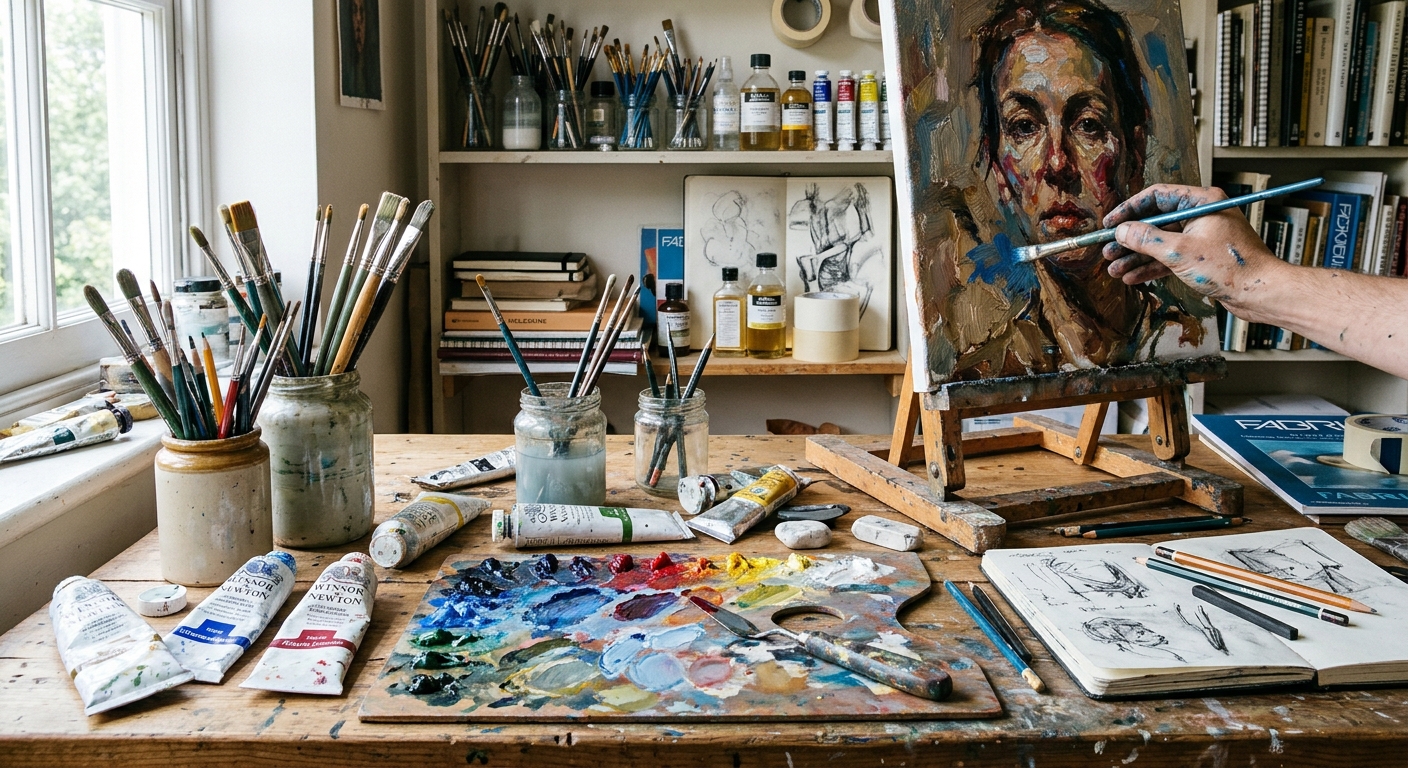
Walk into any well-stocked art supply shop, and you could easily be overwhelmed by the choices. You’ll find countless types of pencils; paints in tubes, pans, pots, and sticks; and paper ranging from very heavy to very light, and everything in between, with varying degrees of quality and cost. It can be all too easy to come home with a bag full of things you will never use.
In truth, most artists only need a small collection of supplies to allow them to create the art they need to make. This guide will show you what art supplies to buy, how to choose the right supplies for the types of art you want to create, and how to shop smart to ensure you aren’t spending more than you need to.
Start With the Question, Not the Shopping List
Before you go and buy anything, think about what you want to make in the next month, not five years, but in the next few weeks. The answer to that question will tell you everything else.
- If you want to sketch and draw, all you need are pencils, paper, and an eraser.
- If you want to paint, the first decision is watercolor or acrylic or oil or gouache.
And if you’re not sure yet, you can always start with the drawing things and a cheap set of paints.
As a rule of thumb, I’d say you should buy the things you need for the projects you’re currently working on, and only the things you need, and then add to your collection when you hit a certain level of frustration with an old set of paints.
Drawing Supplies: The Foundation

Drawing materials are the cheapest way to build skill, and are useful even if later one focuses on painting.
Pencils
Graphite pencils are divided on a scale from hard (H) to soft (B). The harder the lead in the pencil, the lighter the line it will produce. Softer pencils are darker and more smudgy.
A small set of pencils, spanning roughly from 2H, HB, 2B, 4B and 6B, should be sufficient for most shading and sketching tasks. If one only wants to buy a single pencil, 2B is a good choice, being fairly versatile and not too harsh.
Erasers and Sharpeners
There are two erasers worth considering: a kneaded eraser and a plastic or vinyl eraser. The former is useful for lifting graphite off the paper without damaging the surface, and is also useful for smudging out shadows. The latter is better for erasing, in general. A good sharpener is more important than most would expect; a sharp pencil is much easier to control.
Sketchbooks and Drawing Paper
A sketchbook with medium-weight paper is sufficient for most practice. If one intends to draw with ink, markers, or watercolors, one should check if the paper is suited for such media, as cheaper sketchbook paper tends to bleed and scar.
Charcoal and Pastels (Optional)
Charcoal is much more dramatic and expressive than pencils, but it requires a bit more care in terms of preservation, and should probably be left until one is comfortable with pencils.
Painting Supplies: Choosing Your Medium
Each medium behaves differently, so it helps to understand the trade-offs before spending money.
| Medium | Best for | Main advantages | Main drawbacks |
| Watercolor | Light, transparent work, landscapes, travel sketching | Portable, minimal setup, easy cleanup | Hard to correct mistakes, needs good paper |
| Acrylic | Bold color, canvas work, mixed media | Water-based, fast drying, very flexible | Dries quickly on the palette, colors can shift slightly darker as they dry |
| Oil | Rich blending, traditional painting | Slow drying allows long blending time | Needs solvents or alternatives, ventilation, and more setup |
| Gouache | Flat, opaque color, illustration | Matte finish, can be reactivated with water | Can crack if applied too thickly, and reworking can lift layers beneath |
For most beginners, acrylic or watercolor is the easiest entry point. Both are water-based and avoid the extra solvents and ventilation oil painting requires.
Student Grade vs. Artist Grade
Many companies offer two levels of quality. Student grade tends to have less pigment and more fillers, so colors may appear muted. Artist’s grade is more concentrated and mixes more consistently. However, they also tend to be more expensive.
For learning purposes, student grade is perfectly acceptable. If you feel like colors are too muted, only buy a few artist-grade paints to supplement your others.
A Limited Palette Is Not A Compromise
You do not need 36 colors. In fact, a limited palette will teach you more about color mixing and the relationships between colors. A basic palette includes
- a warm and cool red
- a warm and cool yellow
- a warm and cool blue
- plus titanium white for opaque mediums
With this basic set, you can create a surprising number of colors. You might want to invest in a brown or earth tone to make mixing easier.
Check Lightfastness
Lightfastness measures a pigment’s resistance to light. This is important if you want your paintings to last or if you want to sell your work, since some pigments are extremely prone to fading. With more expensive paints, you should be able to find a lightfastness rating on the packaging or the manufacturer’s website. Since these ratings can change depending on the manufacturer, double-check with the company to see if their ratings match the swatch you bought.
READ MORE: 15 Romantic Art Date Night Ideas to Make Every Moment Special
Brushes: Fewer, Better Choices
It seems that every beginner in painting art either buys too much or too little equipment. Consider which brushes you really need for your painting. It is better to buy several nice brushes than a set of cheap and low-quality ones. Here is a suggested list of brushes for someone who is just beginning:
- A round brush of two sizes (about 4 and 8);
- A flat brush;
- A bigger wash brush for watercolors.
Synthetic brushes are usually cheap and of good quality, so it is advisable to buy them. They are perfect for acrylic paints, whereas natural brushes are more suitable for watercolors as they hold more water. However, they are usually expensive, and many people prefer to buy synthetic ones with natural bristles. It is also essential to remember that brushes need to be properly cared for. They must be rinsed and shaken while being submerged in water. After rinsing, a brush needs to dry while being held upright by the bristles or horizontally – not on its side!
Surfaces: The Most Underrated Supply
The surface of paint or drawing plays a significant role in the result.
Watercolor paper: choose paper specially treated for watercolor painting. They are usually indicated by their weight, for example, 140 lb (300 gsm). Textured cotton paper repels water well, but it is more expensive than cellulose paper. Cheap papers will curl under the pressure of water, and the colors will be murky.
Acrylic and oil: canvas, canvas board, or panel are suitable surfaces for these techniques. The canvas board is the most affordable option for practicing. For mixed media: use a heavier paper, suitable for several stages of work with wet and dry techniques.
It is wise to invest in high-quality paper or surfaces if the budget allows. Otherwise, cheap paper will spoil the beautiful colors of paints. A worthy surface improves the result of almost any materials.
Tools and Accessories That Earn Their Place
These smaller items are easy to overlook but make a real difference:
- A palette: a plastic plate, ceramic dish, or tear-off palette works fine
- Water containers: two jars, one for rinsing and one for clean water
- Paper towels or rags
- Masking tape or artist tape: secures paper and creates clean edges
- A pencil for planning: a light underdrawing helps with composition
- A drawing board or flat surface: useful if you work on loose paper
- An apron or old shirt
An easel is nice but not required. A tabletop and a book to prop up your board are enough to start.
Sample Starter Kits by Goal
Beginner sketcher
- 2H, HB, 2B, and 6B pencils
- Kneaded eraser and sharpener
- One sketchbook
Beginner watercolor painter
- Small student-grade set or six to eight tube colors
- One round brush and one wash brush
- A pad of proper watercolor paper
- Palette, two water jars, masking tape
Beginner acrylic painter
- Primary colors plus white
- Two or three synthetic brushes
- Canvas boards or a pad of acrylic paper
- A disposable palette and a spray bottle to slow drying
Mixed media explorer
- A few drawing pencils and a fineliner
- A small set of acrylics or gouache
- Heavy mixed media paper
- Glue, scissors, and a few collage papers
Kits like these cover the essentials without locking you into expensive tools you may not need.
How to Do Art Supplies Shopping Without Wasting Money
Smart art supplies shopping begins with choosing the strategy. Here are some ideas.
Where to Buy
An art supply shop is the best place to ask for advice and test different papers, which you can’t do elsewhere. The staff members are often artists themselves, so they know what a decent midrange option is.
Arts and crafts stores typically carry a wide range of hobbies, including frequent sales. They are great for purchasing staple supplies like brushes, canvases, and tapes. However, the selection of specialized tools may be limited.
Online shops have an advantage in variety and easy price comparison, but you can’t touch the paper and may be misled by the colors on the screen. Make sure to read the product descriptions.
If you are looking for an arts and crafts store near me or where you can find an art supply store, the search results will show the options available in your area. It is worth checking the reviews, hours, and whether they carry the type of medium you’re looking for. It might take time, but calling ahead to inquire about the availability is a good idea if you need something specific.
Cheap Art Supplies That Are Worth Buying
Buying cheap art supplies is not always a bad choice if you know what to invest in and where to look. You can purchase several items at a lower price without noticing a significant difference in quality.
Pencils and sketchbook paper for practice
- Synthetic brushes for acrylics
- Palettes, water jars, and rags
- Canvas boards for experiments
- Student acrylics for practice
Where Not to Cut Corners
- Watercolor papers of low quality
- A few basic pigments
- Brushes for detail work
Practical Ways to Save
Purchasing open stock saves money instead of buying a set of colors that you’ll rarely use. It’s essential to compare prices and look for discounts or seasonal sales.
It’s also a good idea to ask for a student discount or inquire about what the local store offers. You may also want to seek out secondhand stores for larger objects like easels and drawing boards, as well as check out the art supplies section for used but high-quality materials. Make sure to clean and dry the product before using it if possible. And don’t forget about using up old supplies before buying anything new.
Prices and discounts are subject to change, so make sure to double-check everything before making any purchases.
Common Mistakes to Avoid
- Buying a big set on day one. It may seem a good idea to buy a large set, but most colors or tools go unused.
- Picking the wrong type of paper. Using cheap paper with wet media will result in disappointment.
- Not taking notice of warnings. Take care to check labels to see if materials have warnings and make sure that you follow the directions for using the materials. Some pigments and solvents need ventilation and care in their use.
- Neglecting to practice with a simple set. A simple set with a good pencil, eraser, and paper can be more instructive than an expensive complex set.
- Allowing the paint to dry in the tube. Always close the tubes and clean the brushes.
- Comparing oneself to professionals. Most professionals have a set that they have acquired over many years, often buying more expensive items. You should not feel the need to buy more expensive things just because someone else does. A lot of people have sets comparable to professionals without paying the inflated prices.
Final Thoughts
Good art starts with curiosity and regular practice, not with a full set of tools. Pick one medium, buy a small kit, and spend your money first on paper and a few reliable brushes or pencils. Let your actual work, not a list, tell you what to add next.
Frequently Asked Questions(FAQs)
What are the most essential art supplies for a complete beginner?
Pencils, an eraser, a sketchbook, and one simple paint set (watercolor or acrylic) with two or three brushes. That is enough to start learning.
Is it better to buy a set or individual items?
Sets are convenient and cost-effective for a first purchase, but individual items let you choose exactly what you need. Many artists begin with a small set and replace used items individually.
Are expensive art supplies worth it?
Sometimes. Better materials can improve color, durability, and handling, but skill matters more than price. Upgrade where the difference is noticeable to you.
How do I know which paper to buy?
Match the paper to the medium. Watercolor needs absorbent, heavyweight paper. Pencil and ink work on lighter paper. Mixed media needs sturdier stock.
Can I make art with a very small budget?
Yes. Graphite pencils, inexpensive paper, and a small acrylic set give you plenty of room to practice. Reuse and repurpose materials wherever possible.